Driveways, patios, slabs and repairs for West Blocton homes and businesses, built for clay soil, steep hills, and old slabs. We also work in Downtown and Main Street, Italian Town, McGrawtown, Richtown, the Cahaba River Drive area, the Smith Hill Road area, and the Highway 5 corridor. We are based in Hoover, and West Blocton is an easy drive on I-20/59 and Highway 5.

West Blocton is the old coal town of northern Bibb County. It sits about seven miles south of I-20/59, where the Appalachian Mountains end and the Cahaba River runs through the hills. About 1,200 people live here. It is a small town with a long memory, and many of its homes have stood for a hundred years.
West Blocton began in 1883, beside the company town of Blocton. The Cahaba Coal Company opened mines here, and workers came from all over, many of them from Italy. The town was first called Suttletown, after an early store owner, then Smith, and finally West Blocton, to tell it apart from Blocton next door. Both towns were named for the huge blocks of coal pulled from the mines, some weighing as much as a ton.
West Blocton became a town in 1901 and grew fast. It was the fastest-growing town in the coal district, with shops, a bank, churches, and a school. Then hard times came: a tornado in 1903, a big flood in 1916, and a fire in 1927 that burned much of downtown. The town rebuilt each time.
The coal is gone, but the signs of it are still here. The old beehive coke ovens stand at West Blocton Coke Ovens Park, where coal was baked into coke for the iron and steel mills. The old bank building still stands on Main Street. The Italian Catholic Cemetery, where the miners’ families are buried, is listed on the National Register of Historic Places. And every May, the town holds the Cahaba Lily Festival, when the rare white lilies bloom in the shoals of the Cahaba River. The Cahaba River National Wildlife Refuge, just outside town, holds the largest group of Cahaba lilies in the state.
Most homes here are older homes. Many were built in the coal days, on hilly streets like Smith Hill Road, in the old quarters of Italian Town, McGrawtown, and Richtown, or along the river on Cahaba River Drive. Some are newer homes on the roads out of town, toward Woodstock and Vance. The driveways are often steep, and the ground under them has been settling for a long time.
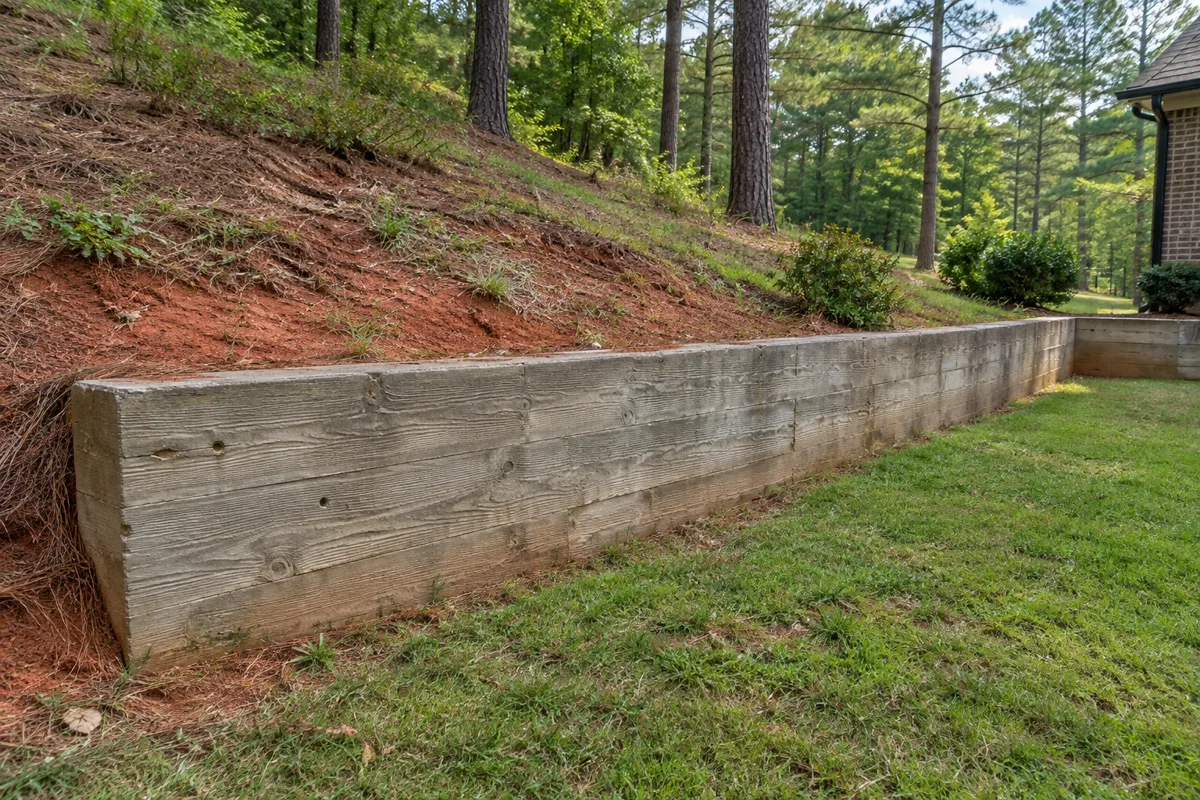
The ground here is the hard part. West Blocton sits on clay-rich soil, like the rest of central Alabama. Clay swells when it gets wet. It shrinks when it dries out. That movement cracks driveways, sinks patios, and shifts slabs. On the hills, rain runs downhill fast and can wash out the ground under a slab. Near the river and the creeks, the ground can stay damp. And under the old homes, the ground has had a hundred years to move.
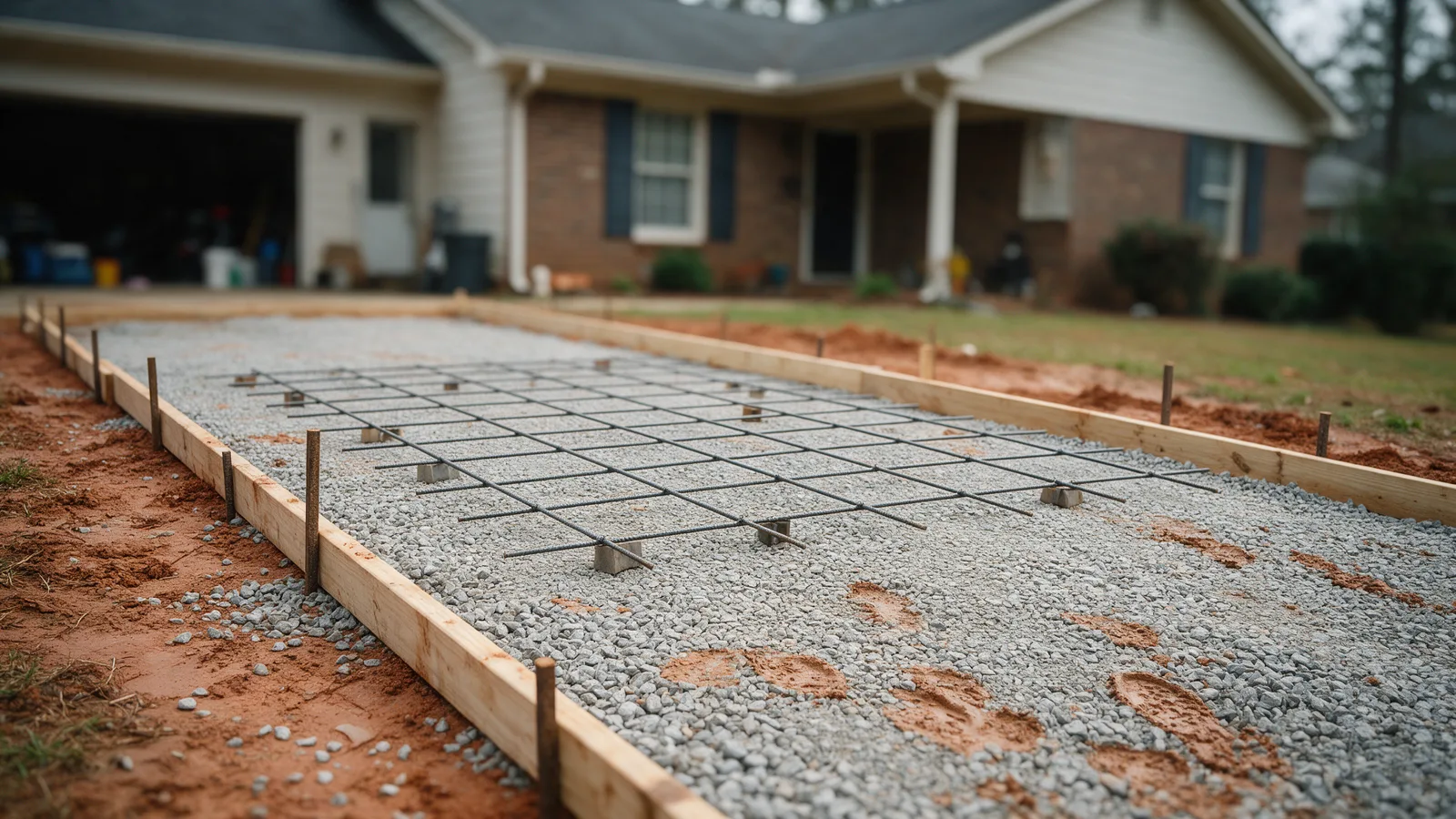
We build for that ground. We check the soil and drainage first. We build a strong base. We add steel reinforcement. We plan for water. Then we pour.
You get the price in writing first. We list materials, labor and prep before work starts, with no surprise fees.
You get an honest answer. Some concrete can be repaired and some should be replaced. We will tell you which makes sense.
Call us and talk directly with the person who will look at your job.
Here are the jobs West Blocton homeowners ask about most. Images are examples of the type of work.

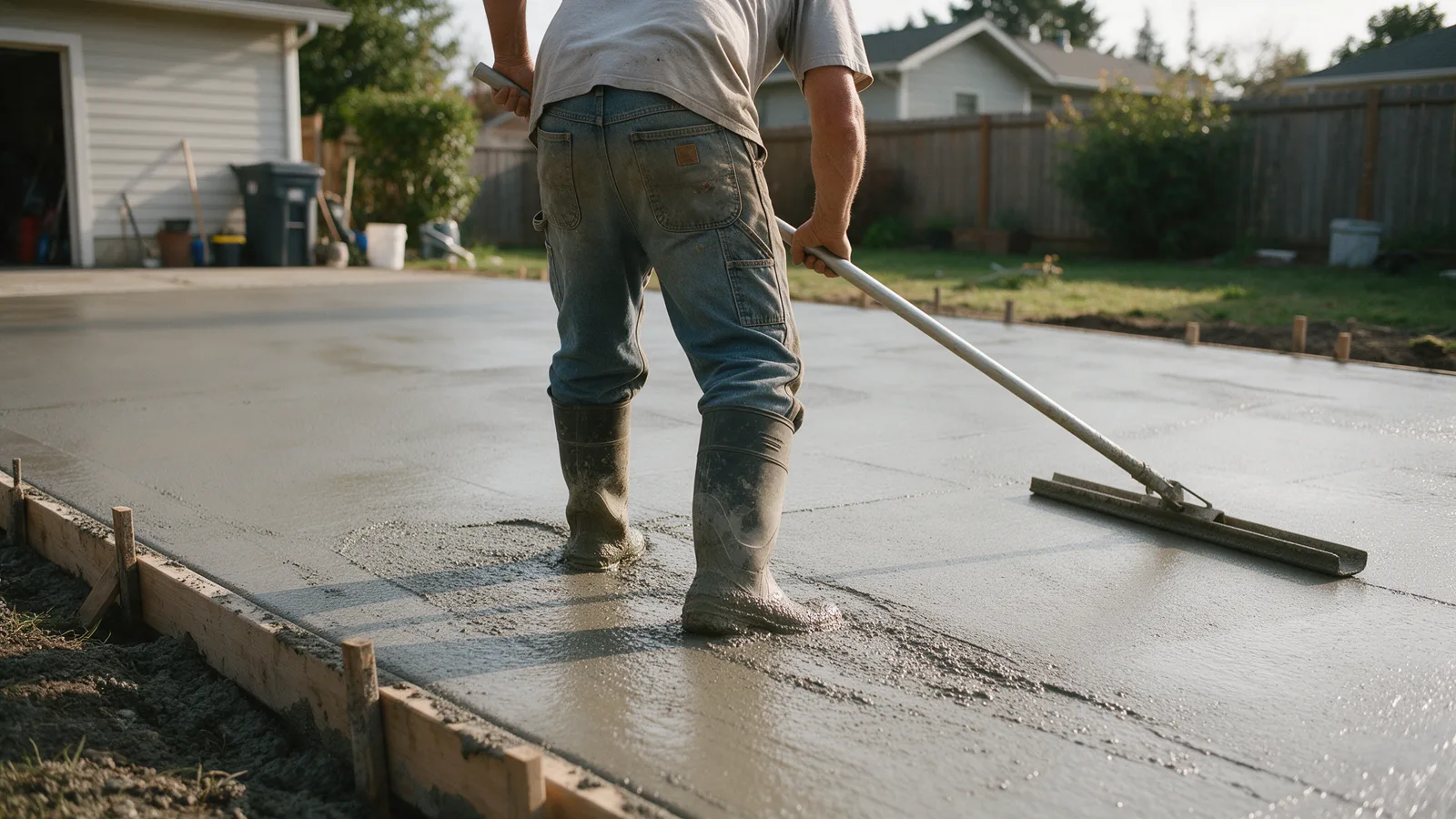
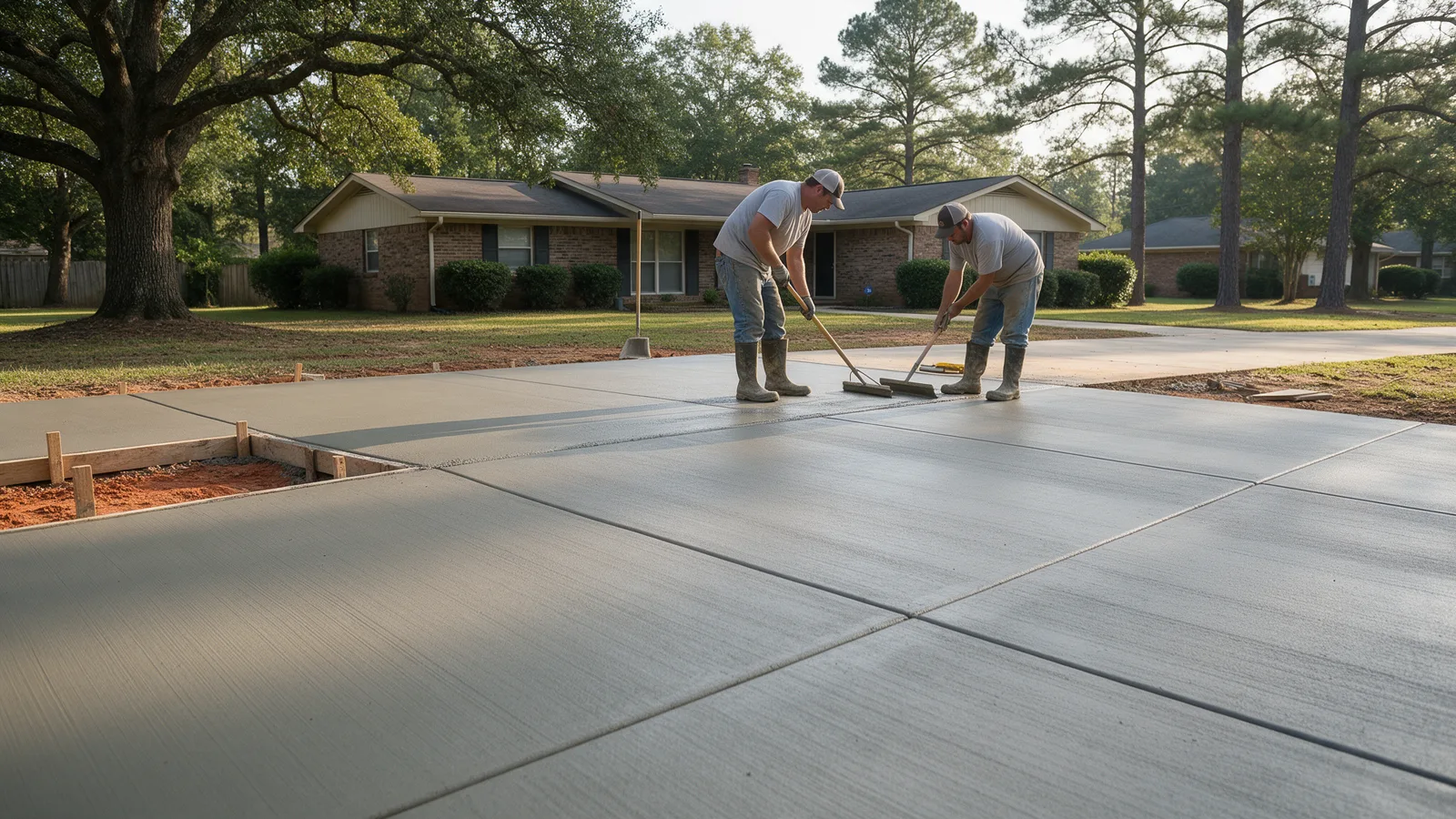
Old, cracked driveways removed and replaced on a compacted base, with control joints and a broom finish for grip.

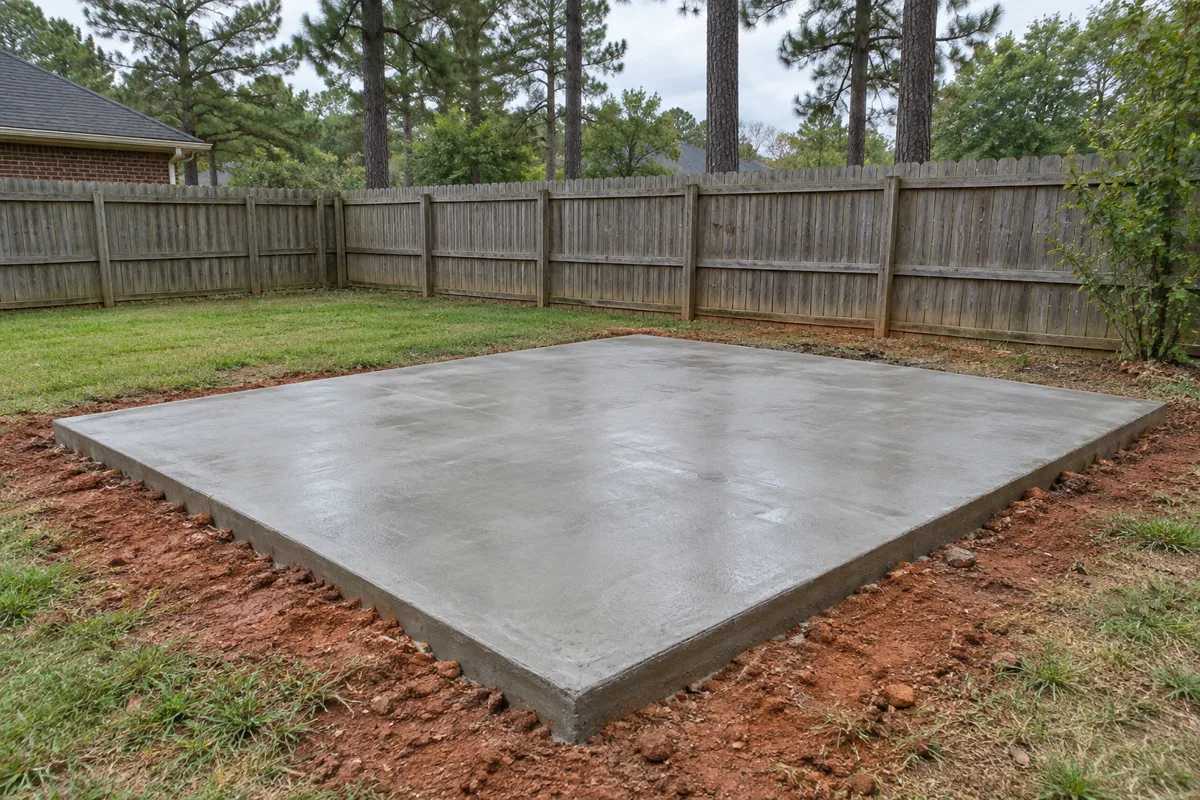
Simple concrete patios sized to your yard and graded so water drains away from your home.

When only part of the slab has failed, we can replace that section instead of the whole driveway.
Built on a compacted base to handle Alabama weather and daily use.
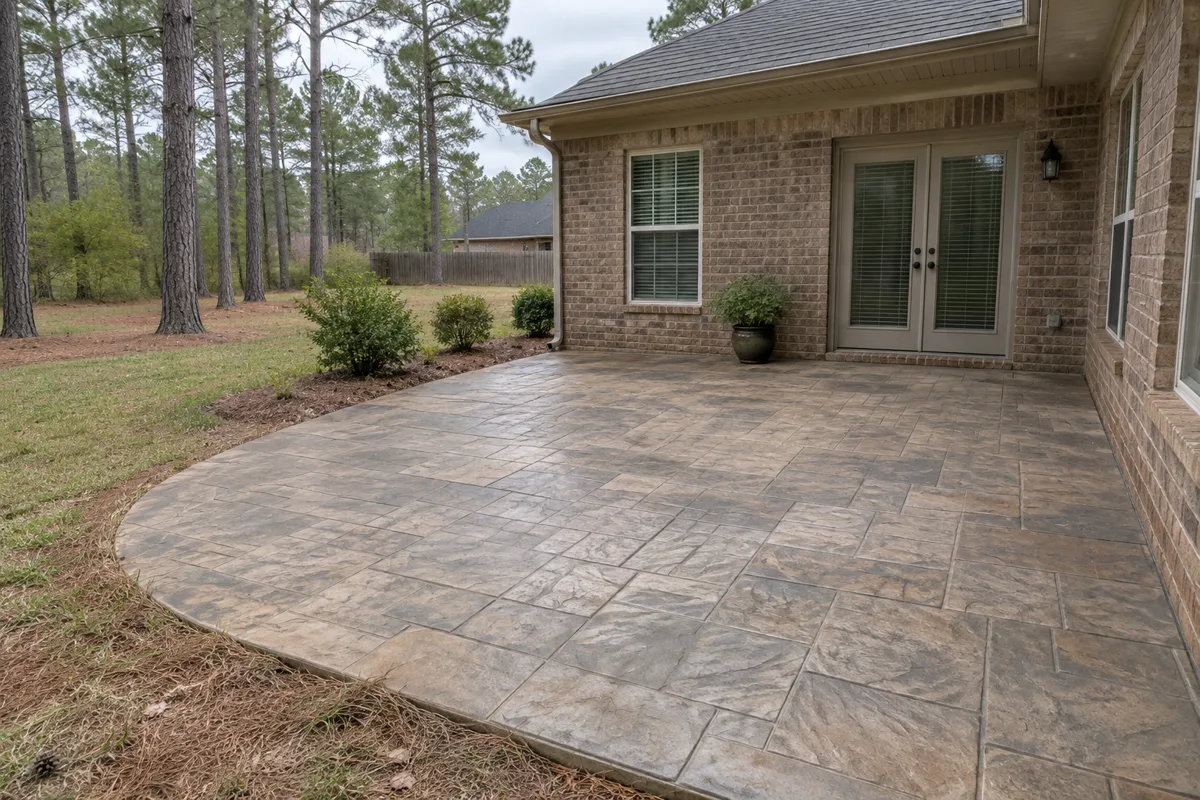
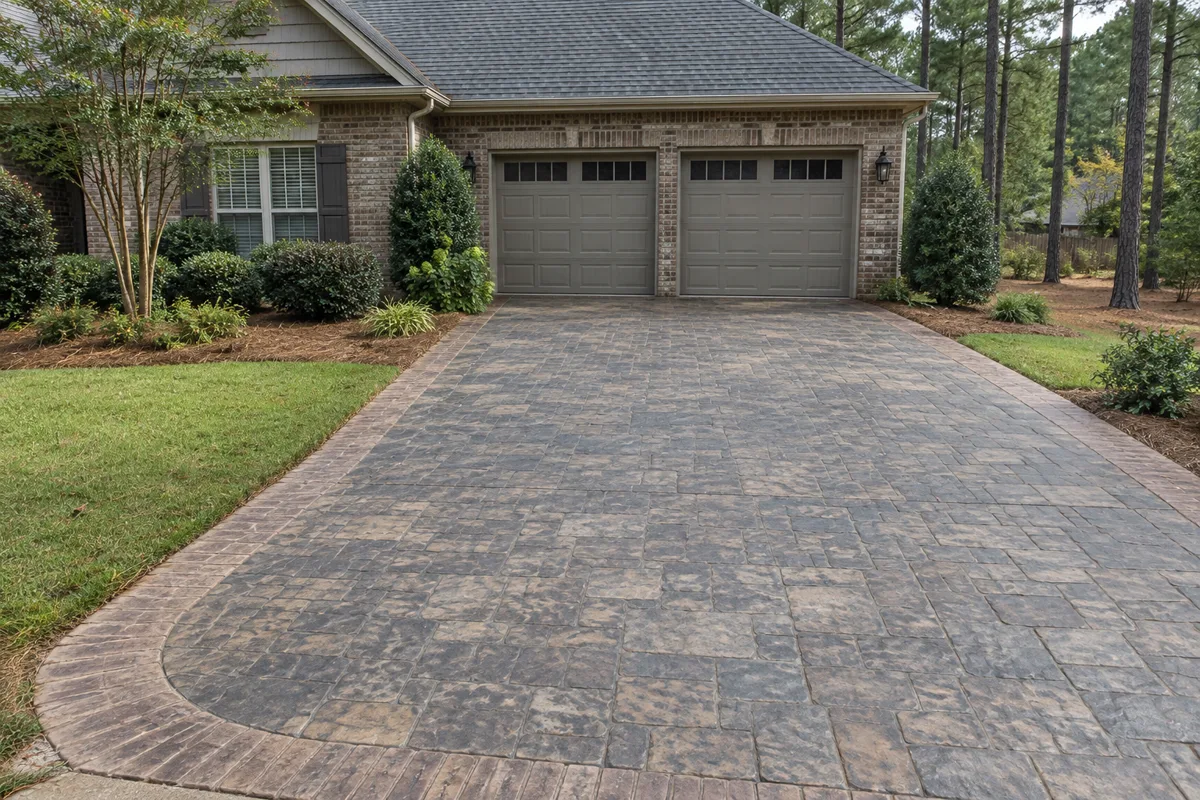
Patterns that mimic brick, stone or tile for patios, walkways and driveways.
Fixes for cracked or uneven surfaces when replacement is not needed.
Crack repair and stabilization, after we find out what is causing the movement.
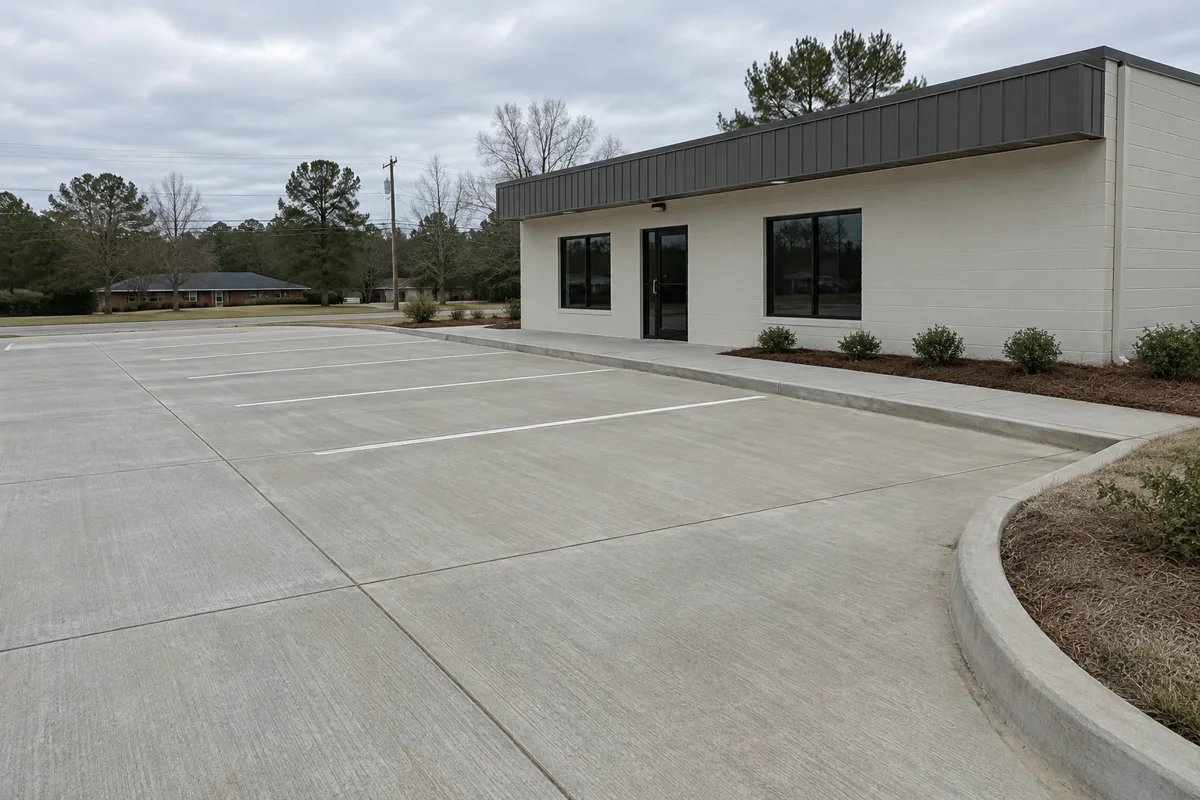
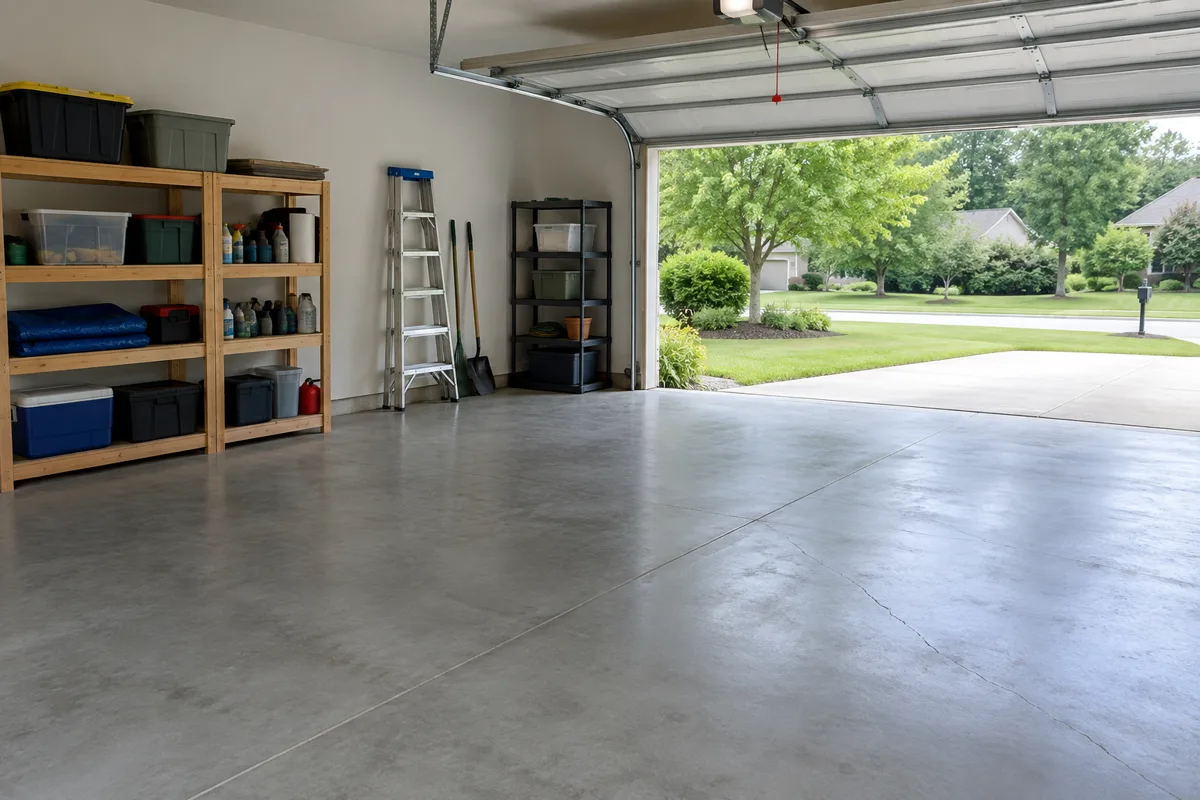
Parking lots, sidewalks and floors for West Blocton businesses.
Colors, textures and finishes that give plain concrete a custom look.
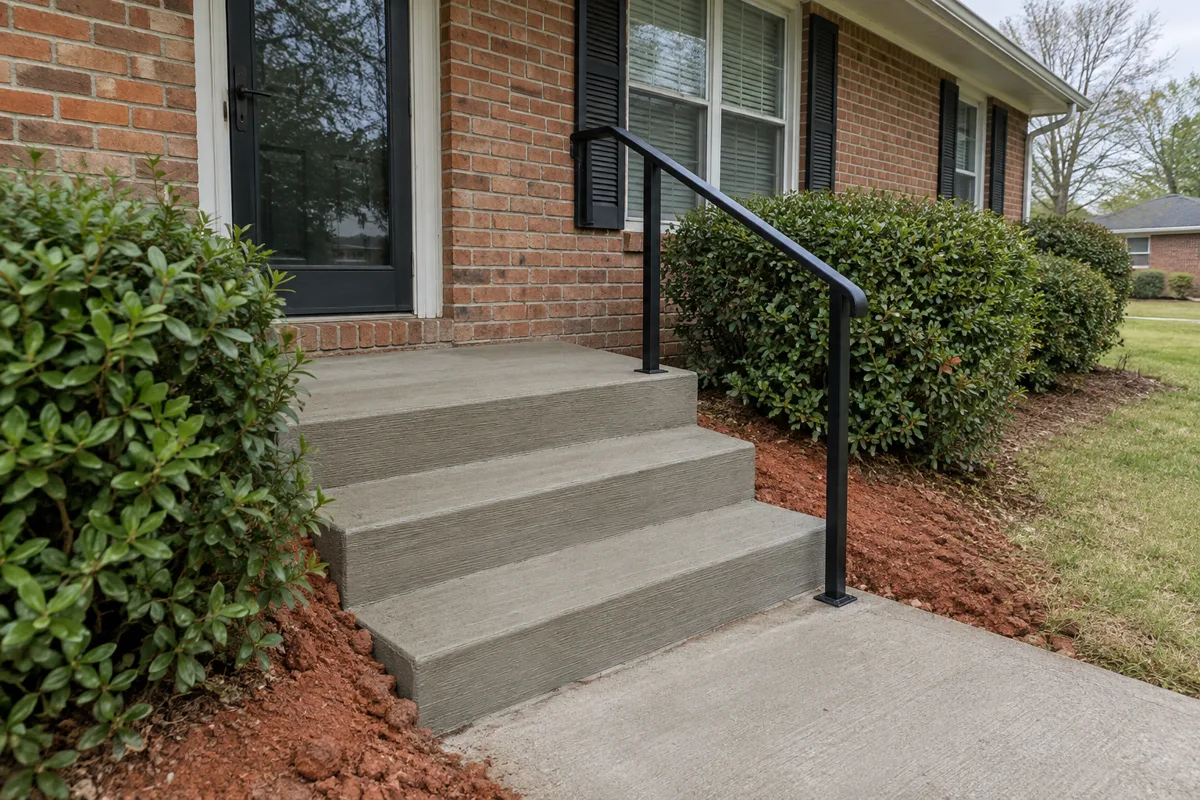
Solid front and backyard steps with even, comfortable rises.
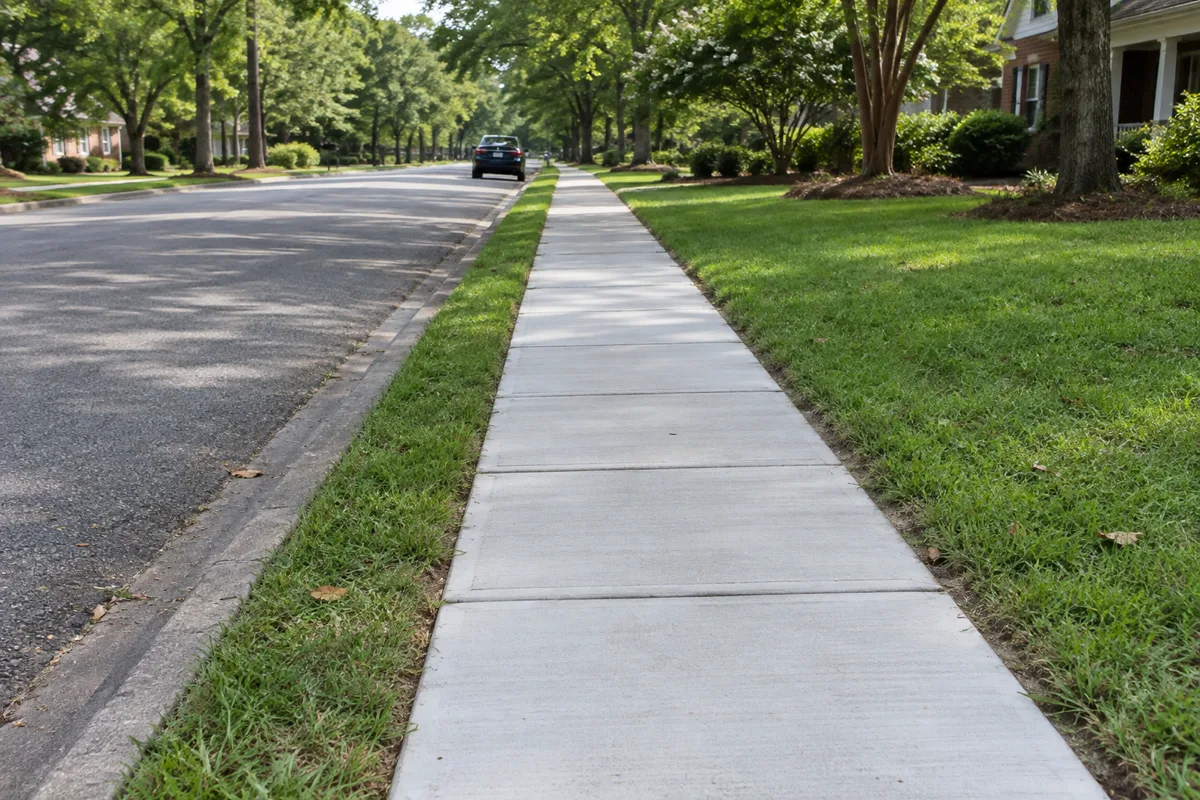
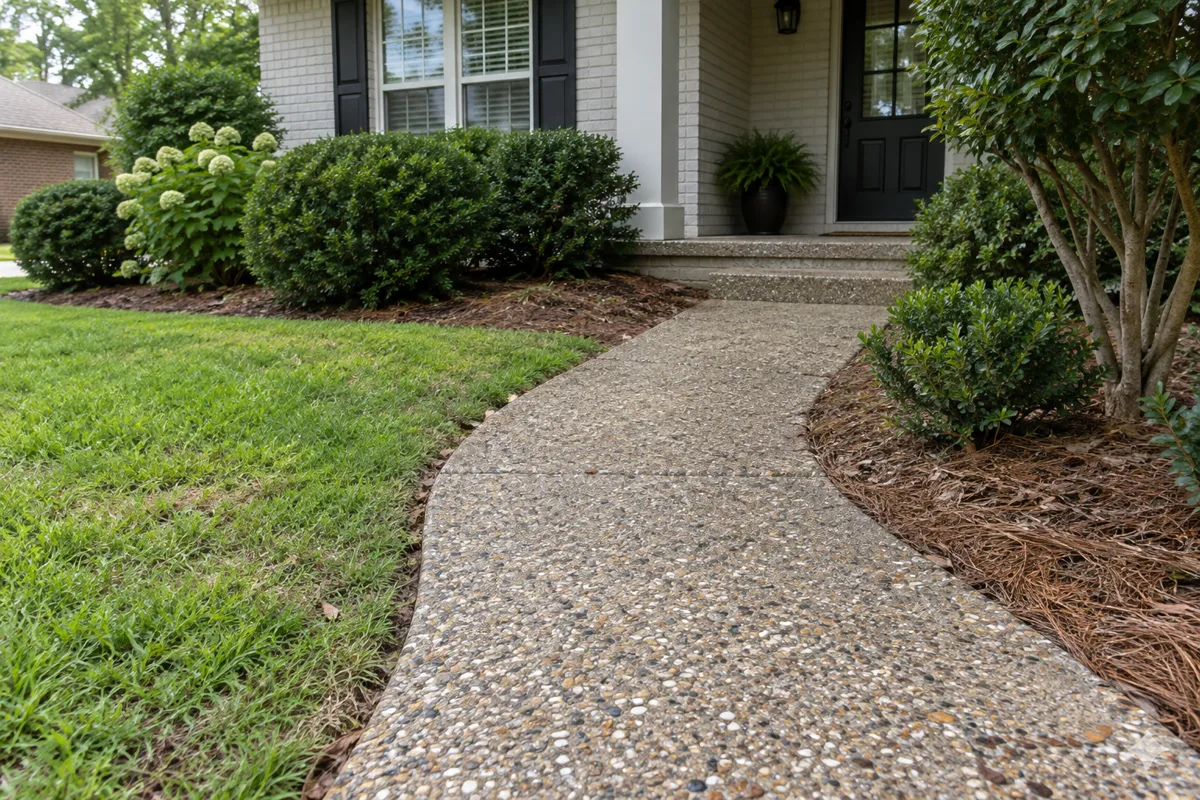
Walkways for homes and businesses, graded so water runs off.
Clean cuts for openings, repairs and sections of old concrete.
Strong pavers that lock together for patios and driveways, laid on a firm base.
A good pour starts before any concrete arrives. Here is what we look at on every visit.
We look at the soil. We look at where water goes after rain. On the hills, rain runs downhill fast. Near the river and the creeks, the ground can stay damp. We plan where water should go, so it does not wash out the ground under the slab.
We compact the ground layer so it does not sink later. A weak base is a common cause of cracks.
Steel bars or mesh help the slab hold together when the ground moves.
These straight cuts give concrete a planned place to crack as it shrinks and moves.
Most patios, sidewalks and slabs are 4 inches thick. Trucks and large equipment need more.
Usually walk on it in 1 to 2 days and drive on it after about 7. Full strength takes about 28 days.
Slope and grade — Grade is how steep the ground is. A steep driveway needs a different plan than a flat one. Many lots in West Blocton slope down toward the road or the creek, so we check the slope before we form the slab.
Typical planning ranges, not a quote.
Job
Per sq ft, installed
Plain driveway or patio, 4-inch slab
$6 to $12
Thicker reinforced slab, 5 to 6 inches
$8 to $16
Stamped or exposed aggregate
$10 to $24
What changes your price
The size of the area, ground prep, removal of old concrete, your finish, and any drainage work. Small jobs often cost more per square foot.
Older slabs can also cost more, because removal takes extra work. In West Blocton, many homes are old coal-town homes with driveways that have been there for decades, and many lots are steep, so a full removal and replacement costs more than a short, flat driveway.
How long it takes
Most small jobs take a few days once work begins. Larger jobs take longer. You get the timeline before we pour.
Call or send a message. We check the soil and slope, check drainage, and measure the area.
A clear price in writing, with no pressure to sign on the spot.
We prep, pour and finish, then allow for proper cure time.
We walk the job with you, clean up and explain how to care for it. We also show you the simple care: sweep it clean, seal it every 2 to 3 years, fix small cracks early, and do not park heavy loads on it before the cure time is over.
It depends on the job. No separate building department was found for West Blocton, so permits are handled through the Town of West Blocton at Town Hall. Driveways and patios are not named either way in the rules we found, so we check with the town about your address before we set a date. When a permit is needed, we help with the paperwork.
25 to 30 years, when it is built right. The keys are a compacted base, proper thickness, reinforcement, and drainage for our clay soil and hilly ground.
The main cause is movement in the ground. Clay soil swells when wet and shrinks when dry. Heavy rain, tree roots, and a weak base can also cause cracks. On the hills, fast downhill rain can wash out the ground under a slab, and near the river and the creeks, damp ground can make the problem worse. Control joints, reinforcement, and a compacted base help reduce this risk.
Not in how we build it, but in what we find underneath. Many West Blocton homes were built in the coal days, more than a hundred years ago, and their driveways and slabs have had a long time to settle, crack, and shift. The ground under an old slab is often soft or uneven, and the lot is often steep. We check the slope, the base, and the drainage before we form the slab, and we tell you what is needed before we pour.
Yes, with the right mix and protection. We watch the forecast and use cold-weather methods when temperatures drop near freezing.
It depends on the damage. Small cracks and worn surfaces can often be repaired. A slab that has sunk a lot, or has large structural cracks, may need replacement. In West Blocton, the old driveways around the coal-town homes and the steep driveways on the hills often need a full replacement. We look at the slab first and give you an honest answer.
Yes. Every job starts with a free on-site visit and a written estimate. Call 205-584-0968.
Cracked driveway on Main Street? Sinking patio near the Cahaba River? Tell us what you see. We will tell you what it needs and what it costs.