Driveways, patios, slabs and repairs for Woodstock homes and businesses, built for clay soil, hilly lots, and long driveways. We also work in the Eastern Valley Road area, the Highway 5 corridor, the Highway 11 corridor, Cowley Subdivision, Country Lane, Woodstock Estates, and the Worthington Drive area. We are based in Hoover, and Woodstock is an easy drive on I-20/59.

Woodstock is the old railroad town of northern Bibb County. It sits where Eastern Valley Road runs into Highway 5, and Highway 5 runs into Highway 11, just off I-20/59 at Exit 97. About 1,500 people live here. Most of the town is in Bibb County, with a small part reaching into Tuscaloosa County to the northwest. That county line matters: it can change which school system and which metro area covers your address, so we always check the parcel before we start.
Woodstock was first settled in the 1820s. In 1826, William Houston was given the land by formal grant, and his family built a community along the old Tuscaloosa to Huntsville stagecoach line. The town got its name from Dr. J. U. Ray, who named it after the home of his ancestors, Woodstock, England. In 1870, when the Alabama and Chattanooga Railroad reached the town, Dr. Ray built the first depot. Two years later, Woodstock became a junction, with a branch line running down to the coal mines at West Blocton.
The town became a break and storage yard for coal, red and brown iron ore, and cotton. In 1872, Welsh-born engineer Giles Edwards built a blast furnace here to make pig iron. In the 1880s, a jug factory opened to use the large deposits of fire clay in the area. At its busiest, as many as eight trains a day stopped in Woodstock, six of them carrying mail. A newspaper that started here later moved to Birmingham and became The Birmingham News.
In 2017, Woodstock was featured in the popular podcast S-Town, which was set and recorded here. The town became official in 1996, first as the Town of North Bibb. In 2000, after a public vote, it took back its old name, Woodstock. Since then the town has grown, adding land until it now covers 7.2 square miles.
Today Woodstock is a quiet town of family homes, with Woodstock Elementary School, the Woodstock Community Library, the Woodstock Ballpark, and the Arvell Kornegay Walking Track next to Town Hall. Each year the town holds the Woodstock Music Festival, and the Wildflower Walk and Wellness Fair. Most homes here sit on good-sized lots, often an acre or more, on wooded, hilly ground. Many were built in the 1980s and 1990s, and some are older homes from the railroad days. The driveways are often long, and the ground under them has had decades to settle.
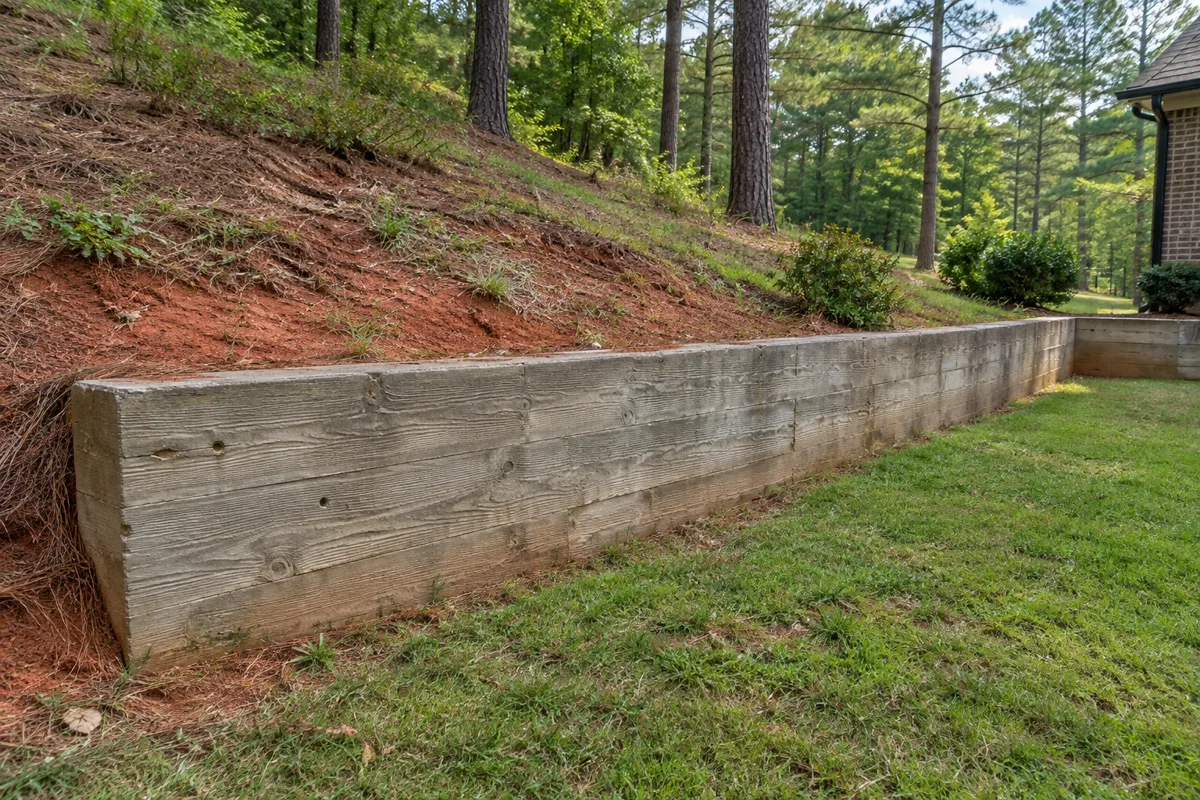
The ground here is the hard part. Woodstock sits on clay-rich soil, like the rest of central Alabama. Clay swells when it gets wet. It shrinks when it dries out. That movement cracks driveways, sinks patios, and shifts slabs. On the hills, rain runs downhill fast and can wash out the ground under a slab. Near the creeks, the ground can stay damp. And under the older homes, the ground has had a long time to move.
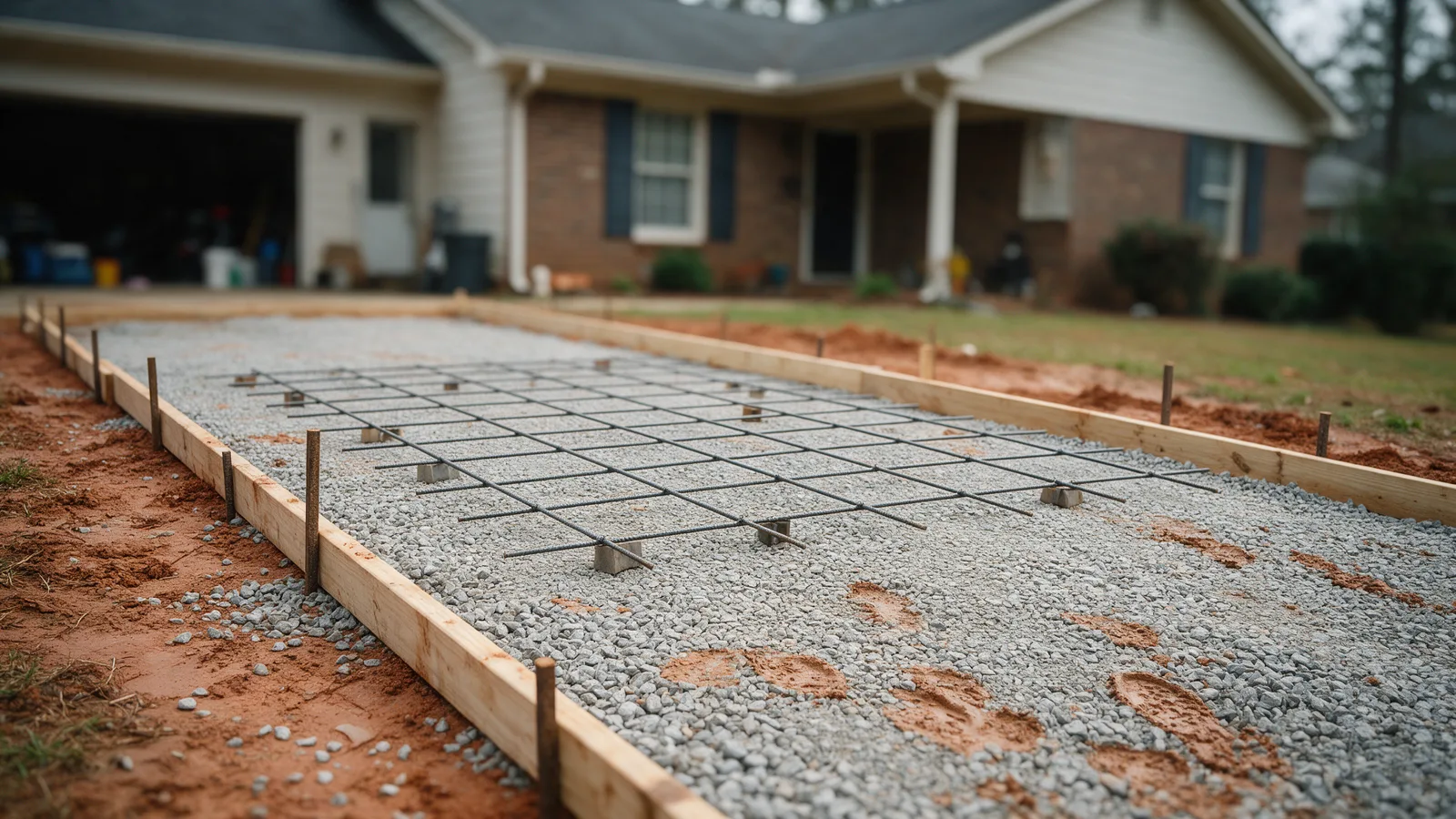
We build for that ground. We check the soil and drainage first. We build a strong base. We add steel reinforcement. We plan for water. Then we pour.
You get the price in writing first. We list materials, labor and prep before work starts, with no surprise fees.
You get an honest answer. Some concrete can be repaired and some should be replaced. We will tell you which makes sense.
Call us and talk directly with the person who will look at your job.
Here are the jobs Woodstock homeowners ask about most. Images are examples of the type of work.

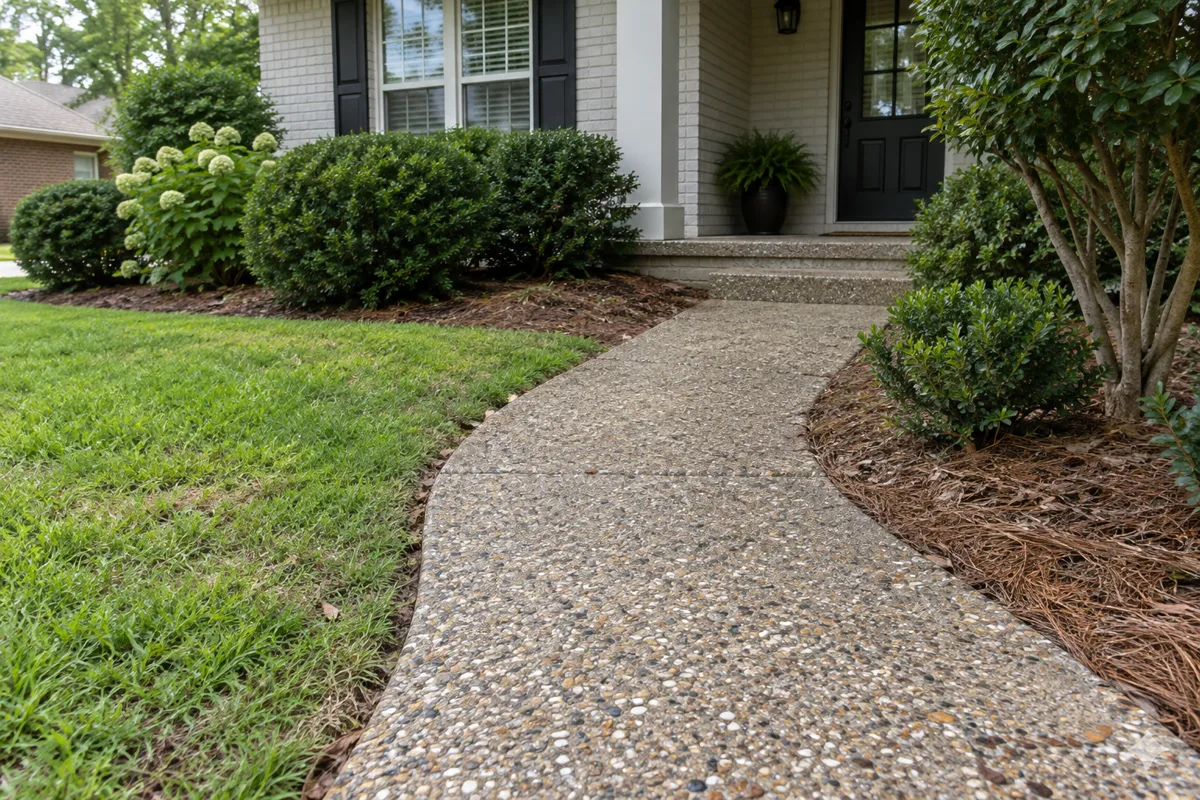
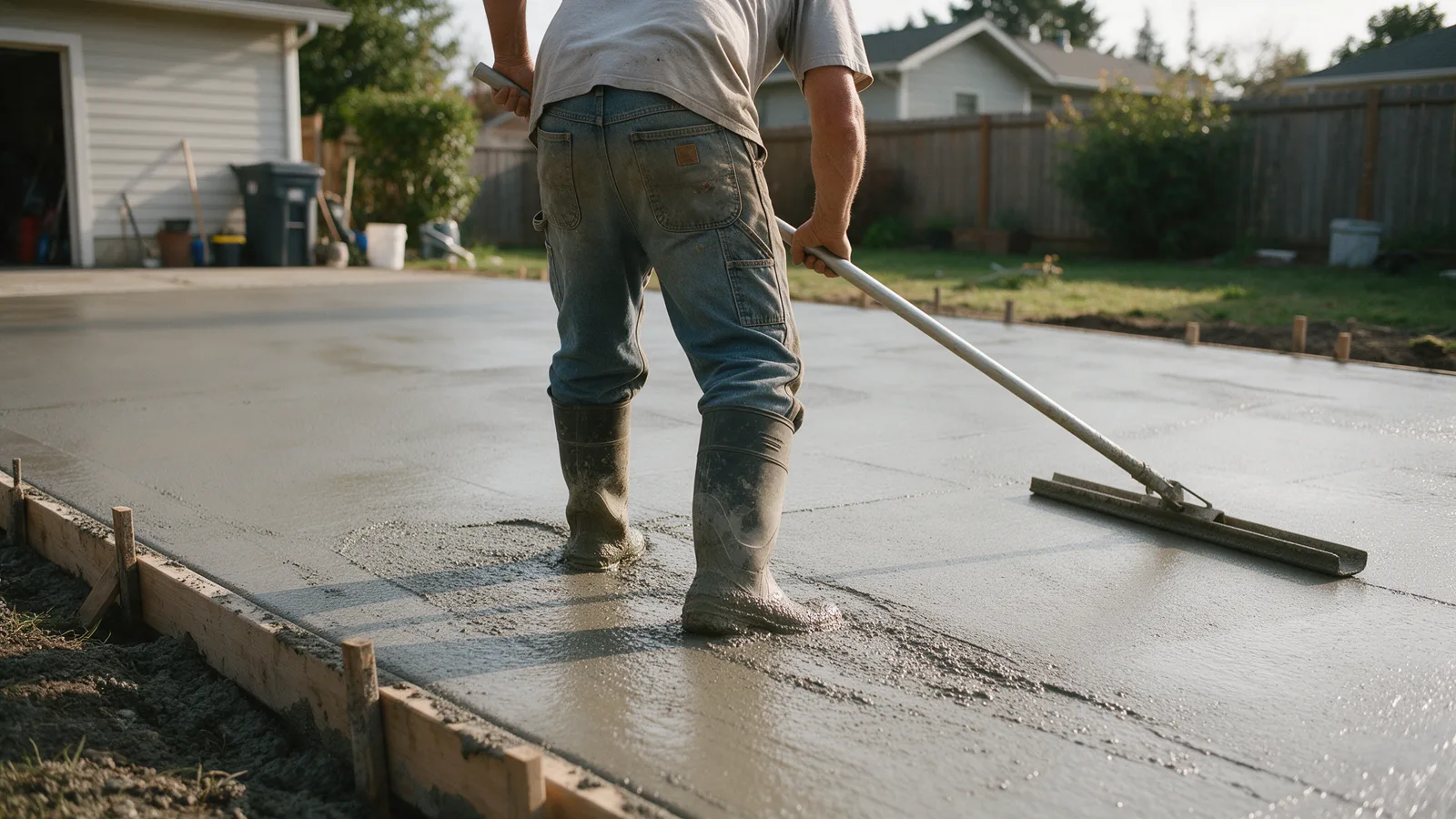
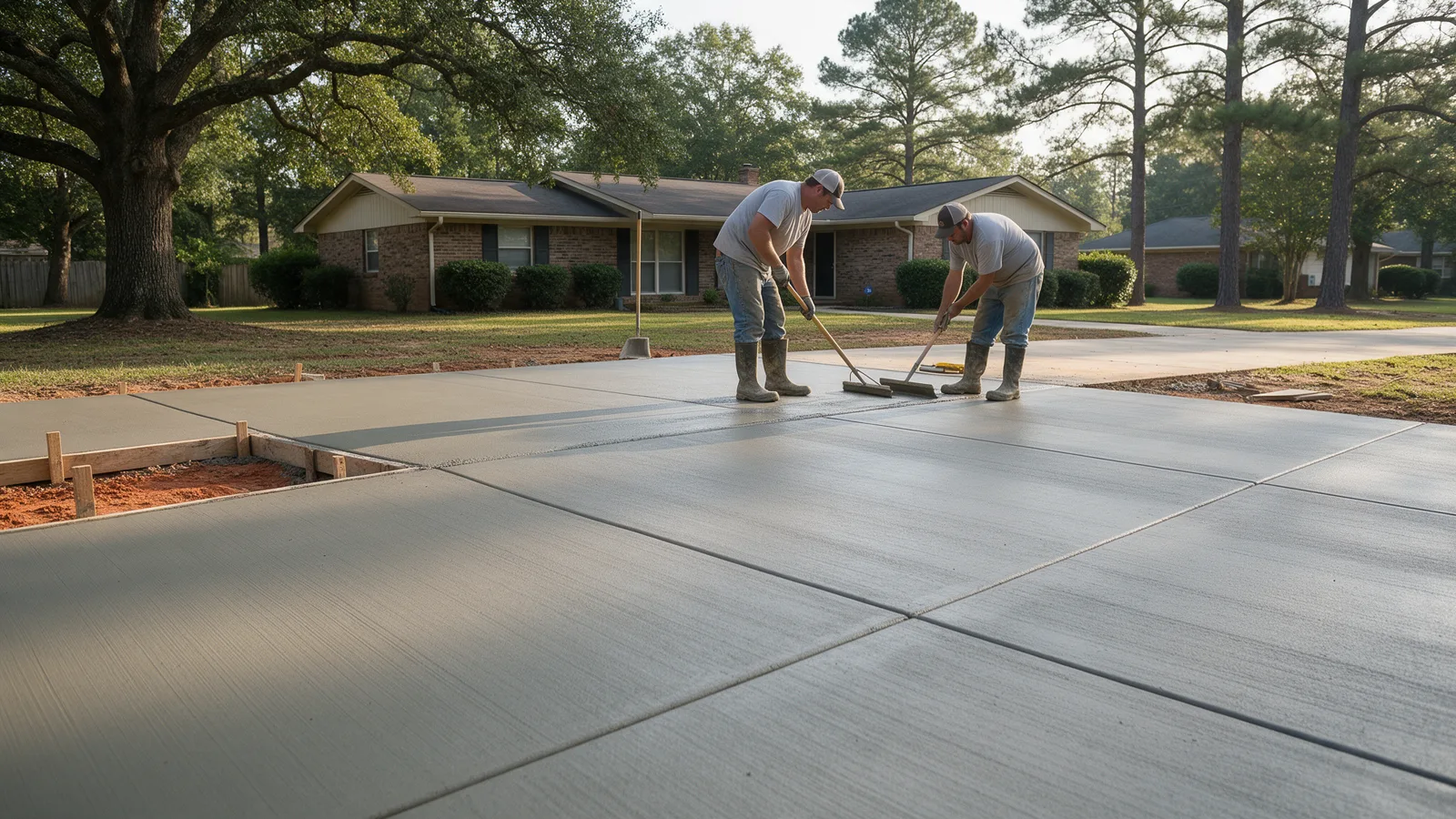
Old, cracked driveways removed and replaced on a compacted base, with control joints and a broom finish for grip.

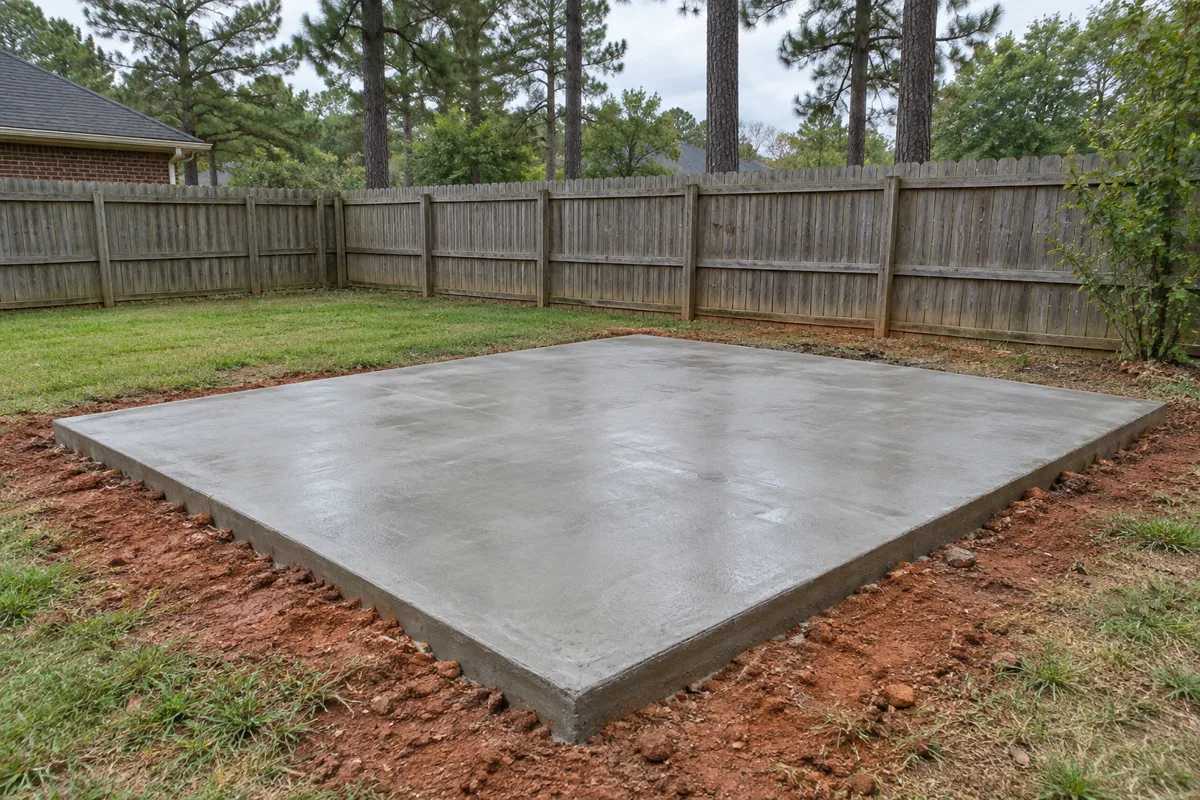
Simple concrete patios sized to your yard and graded so water drains away from your home.

When only part of the slab has failed, we can replace that section instead of the whole driveway.
Built on a compacted base to handle Alabama weather and daily use.
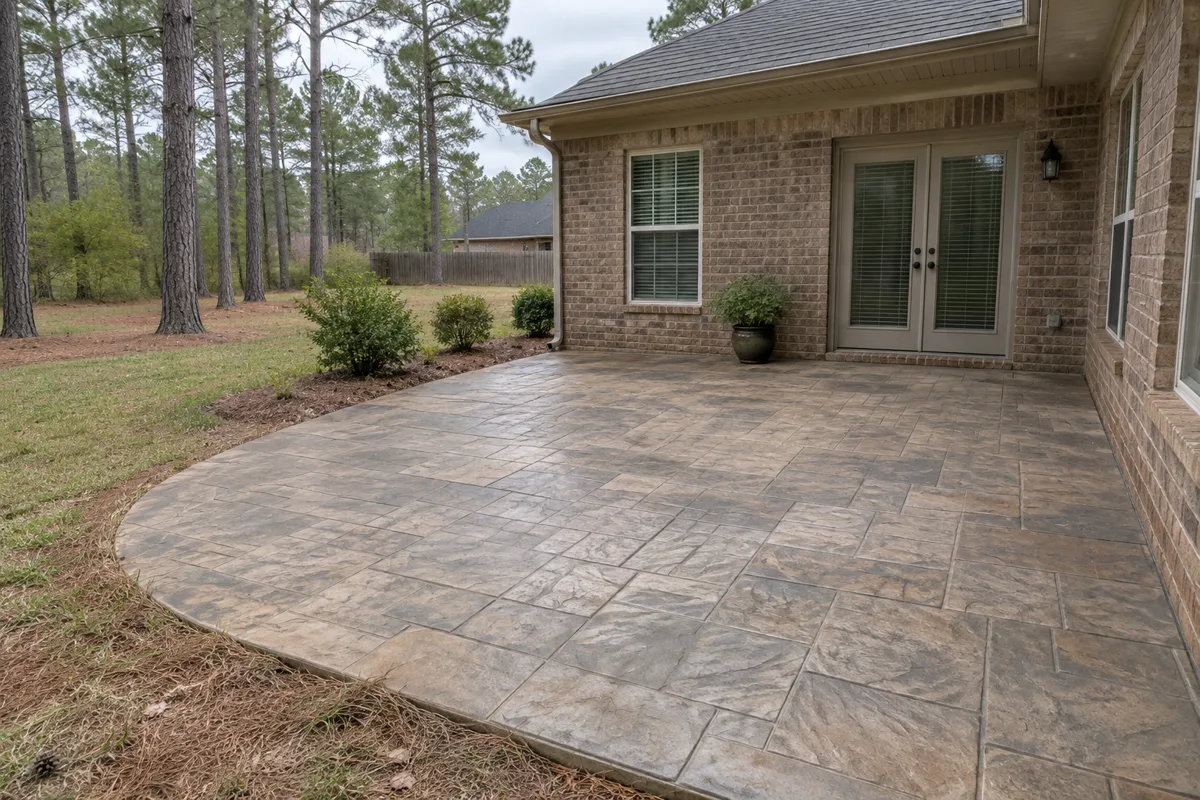
Patterns that mimic brick, stone or tile for patios, walkways and driveways.
Fixes for cracked or uneven surfaces when replacement is not needed.
Crack repair and stabilization, after we find out what is causing the movement.
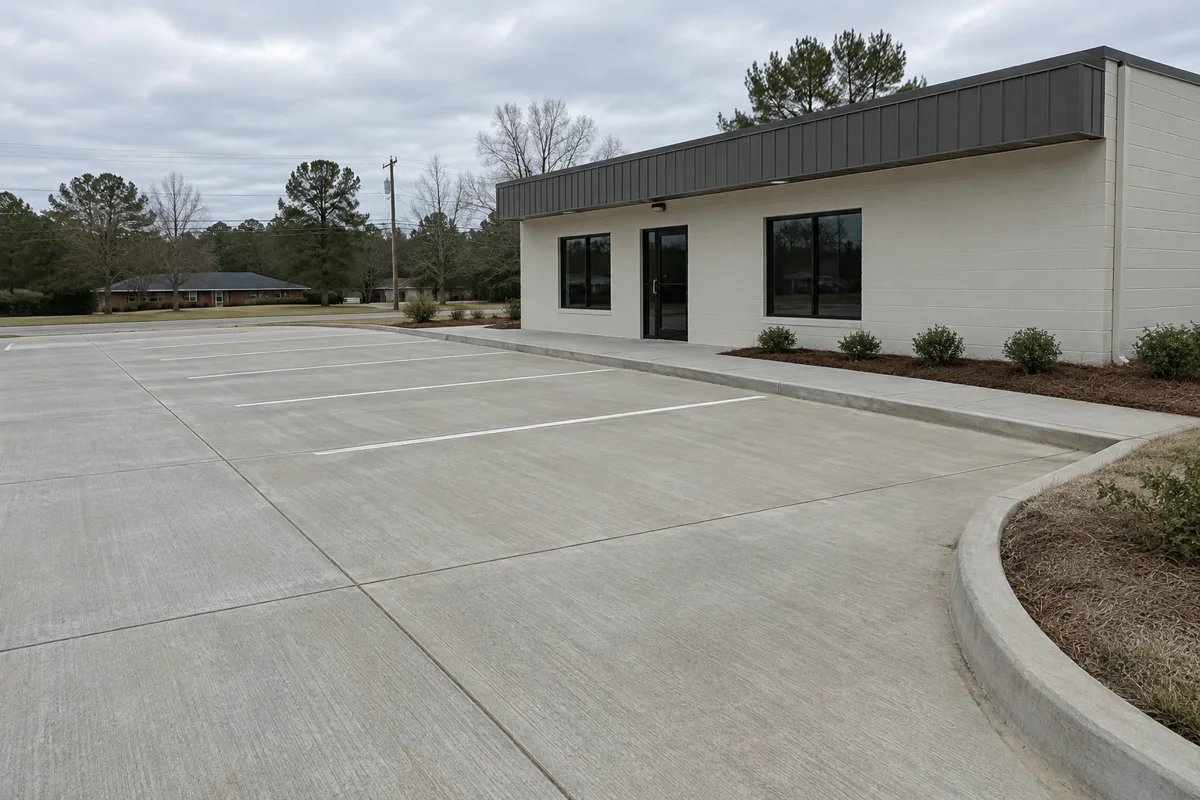
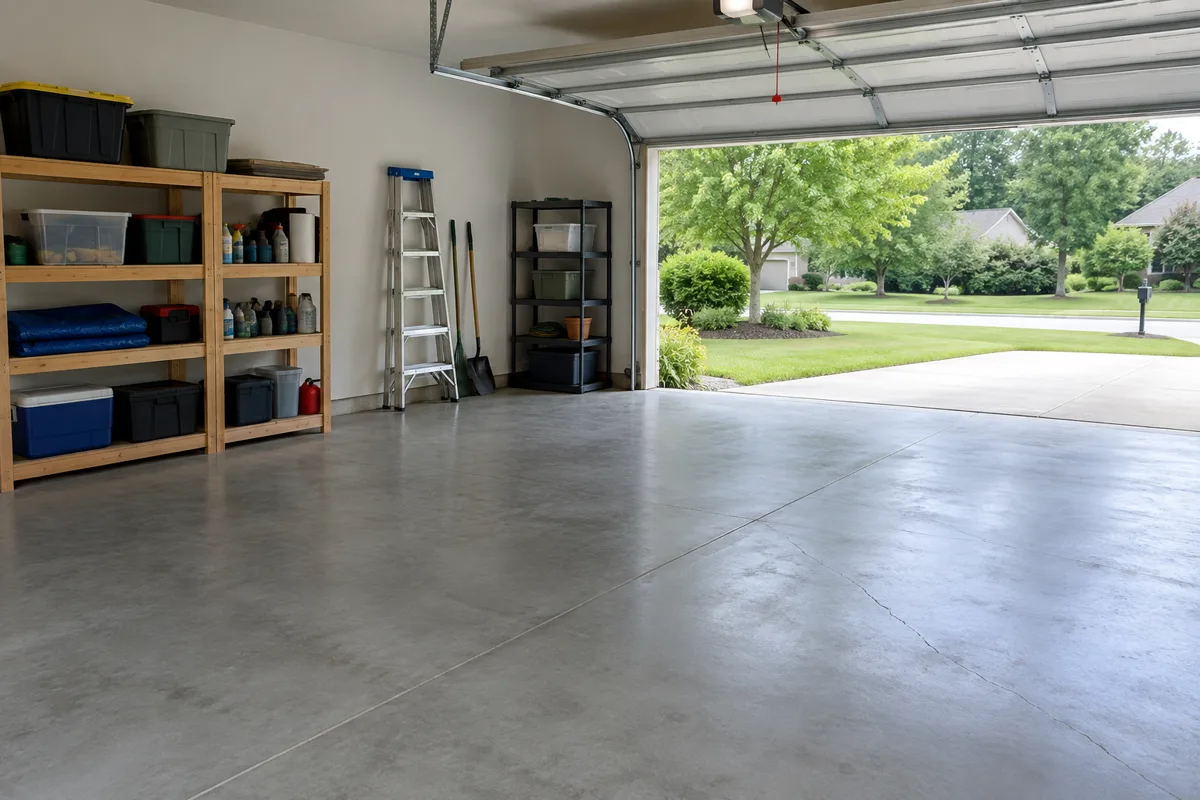
Parking lots, sidewalks and floors for Woodstock businesses.
Colors, textures and finishes that give plain concrete a custom look.
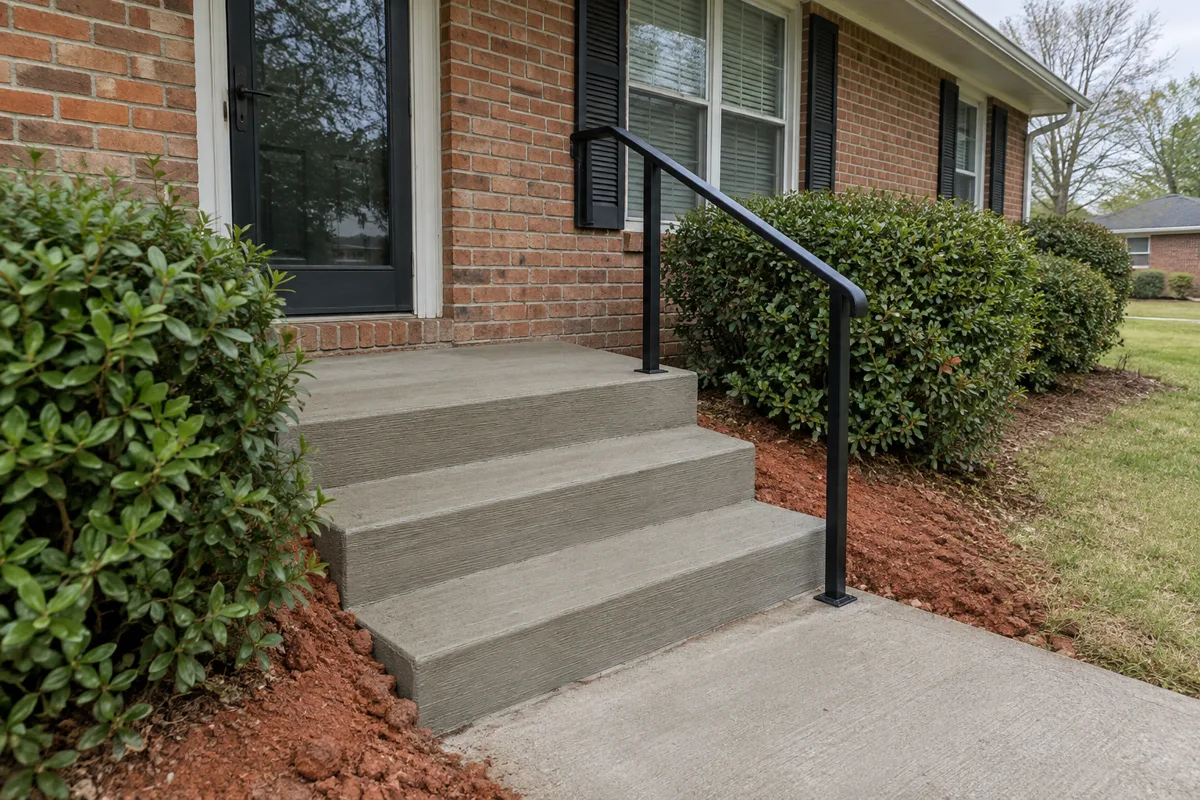
Solid front and backyard steps with even, comfortable rises.
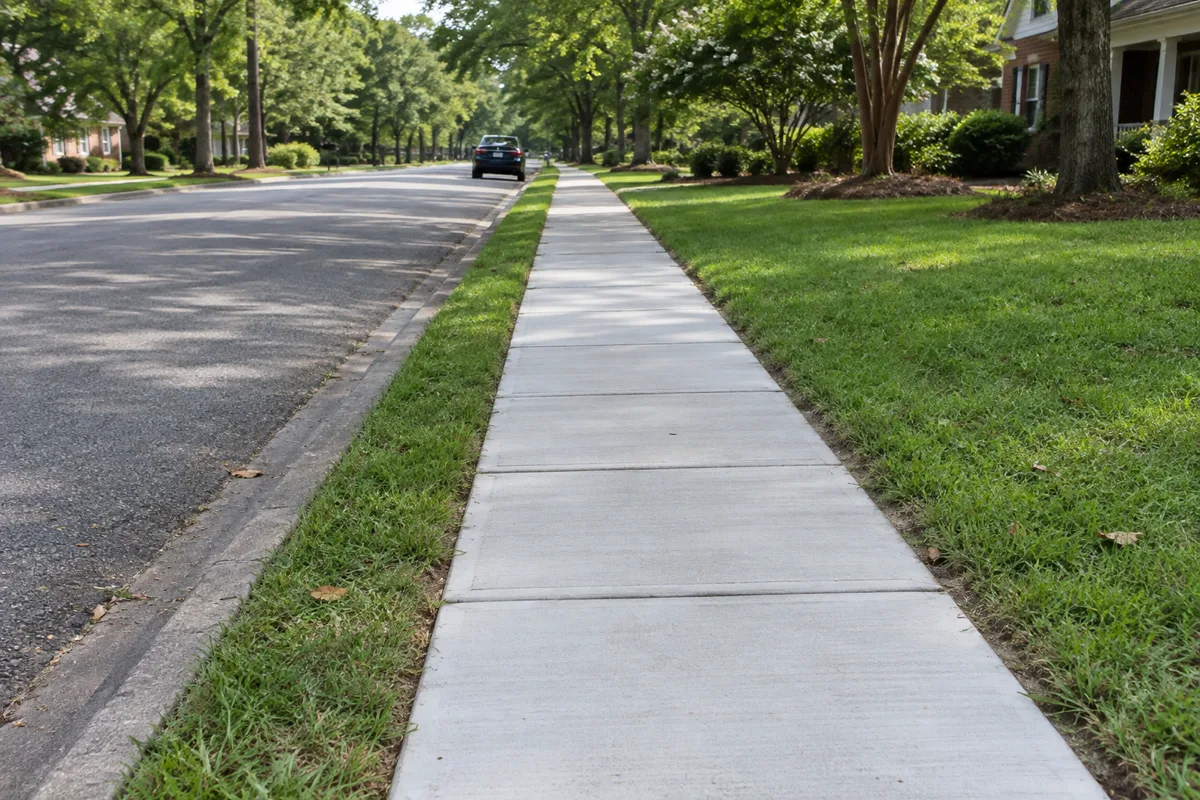
Walkways for homes and businesses, graded so water runs off.
Clean cuts for openings, repairs and sections of old concrete.
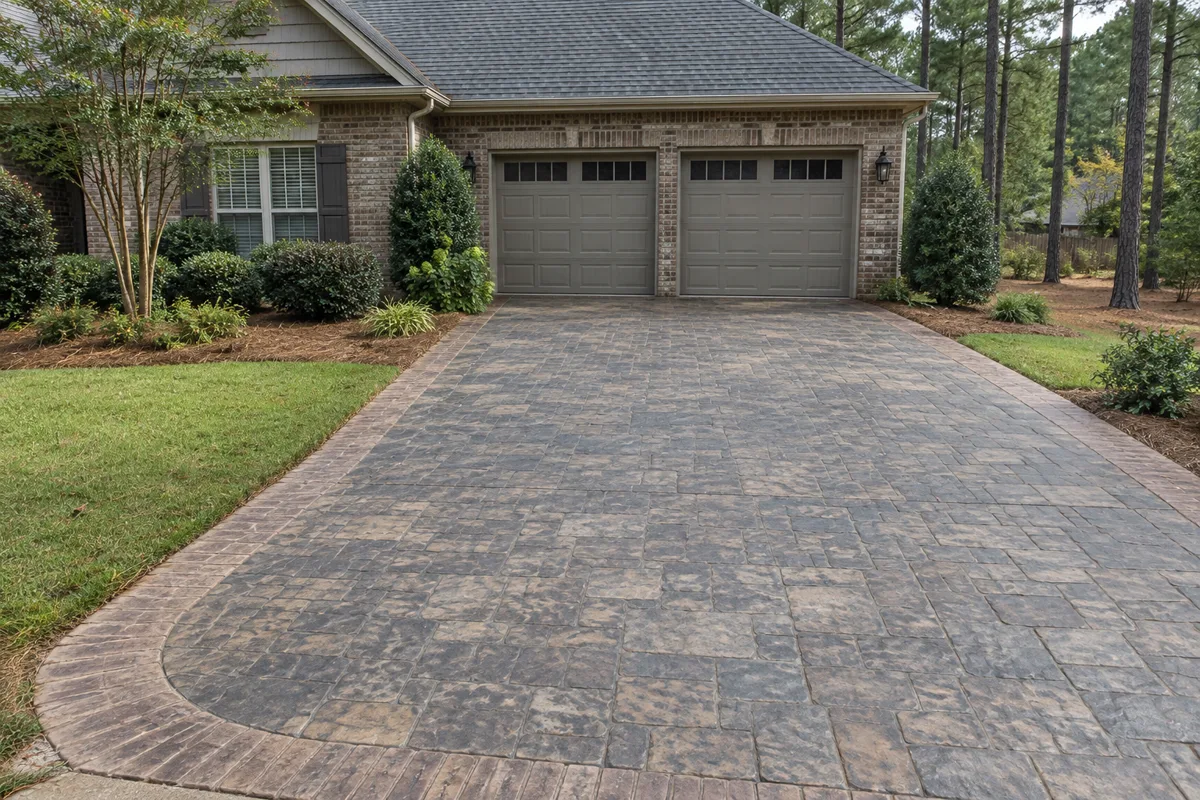
Strong pavers that lock together for patios and driveways, laid on a firm base.
A good pour starts before any concrete arrives. Here is what we look at on every visit.
We look at the soil. We look at where water goes after rain. On the hills, rain runs downhill fast. Near the creeks, the ground can stay damp. We plan where water should go, so it does not wash out the ground under the slab.
We compact the ground layer so it does not sink later. A weak base is a common cause of cracks.
Steel bars or mesh help the slab hold together when the ground moves.
These straight cuts give concrete a planned place to crack as it shrinks and moves.
Most patios, sidewalks and slabs are 4 inches thick. Trucks and large equipment need more.
Usually walk on it in 1 to 2 days and drive on it after about 7. Full strength takes about 28 days.
Slope and grade — Grade is how steep the ground is. A steep driveway needs a different plan than a flat one. Many lots in Woodstock slope down toward the road or the creek, so we check the slope before we form the slab.
Typical planning ranges, not a quote.
Job
Per sq ft, installed
Plain driveway or patio, 4-inch slab
$6 to $12
Thicker reinforced slab, 5 to 6 inches
$8 to $16
Stamped or exposed aggregate
$10 to $24
What changes your price
The size of the area, ground prep, removal of old concrete, your finish, and any drainage work. Small jobs often cost more per square foot.
Older slabs can also cost more, because removal takes extra work. In Woodstock, many homes sit on large, wooded lots, and their driveways are often long, so a full removal and replacement costs more than a short, flat driveway.
How long it takes
Most small jobs take a few days once work begins. Larger jobs take longer. You get the timeline before we pour.
Call or send a message. We check the soil and slope, check drainage, and measure the area.
A clear price in writing, with no pressure to sign on the spot.
We prep, pour and finish, then allow for proper cure time.
We walk the job with you, clean up and explain how to care for it. We also show you the simple care: sweep it clean, seal it every 2 to 3 years, fix small cracks early, and do not park heavy loads on it before the cure time is over.
It depends on the job. The Town of Woodstock lists Building, Electrical, Mechanical and Plumbing permits, and permits are handled through the Town of Woodstock at Town Hall, 28513 Highway 5. Driveways and patios are not named either way in the rules we found, so we check with the town about your address before we set a date. When a permit is needed, we help with the paperwork.
25 to 30 years, when it is built right. The keys are a compacted base, proper thickness, reinforcement, and drainage for our clay soil and hilly ground.
The main cause is movement in the ground. Clay soil swells when wet and shrinks when dry. Heavy rain, tree roots, and a weak base can also cause cracks. On the hills, fast downhill rain can wash out the ground under a slab, and near the creeks, damp ground can make the problem worse. Control joints, reinforcement, and a compacted base help reduce this risk.
Not in how we build it, but in what we find underneath. Many Woodstock homes were built in the 1980s and 1990s, and some go back to the railroad days. Their driveways and slabs have had decades to settle, crack, and shift. The ground under an old slab is often soft or uneven, and the lot is often steep. We check the slope, the base, and the drainage before we form the slab, and we tell you what is needed before we pour.
Yes, with the right mix and protection. We watch the forecast and use cold-weather methods when temperatures drop near freezing.
It depends on the damage. Small cracks and worn surfaces can often be repaired. A slab that has sunk a lot, or has large structural cracks, may need replacement. In Woodstock, the older driveways around the railroad-era homes and the long driveways on large, wooded lots often need a full replacement. We look at the slab first and give you an honest answer.
Yes. Every job starts with a free on-site visit and a written estimate. Call 205-584-0968.
Cracked driveway on Eastern Valley Road? Sinking patio near Highway 5? Tell us what you see. We will tell you what it needs and what it costs.